LESSONS FROM THE “BABA ALINO” CASE, OR WHY A NOTARY IS (NOT) SUFFICIENT
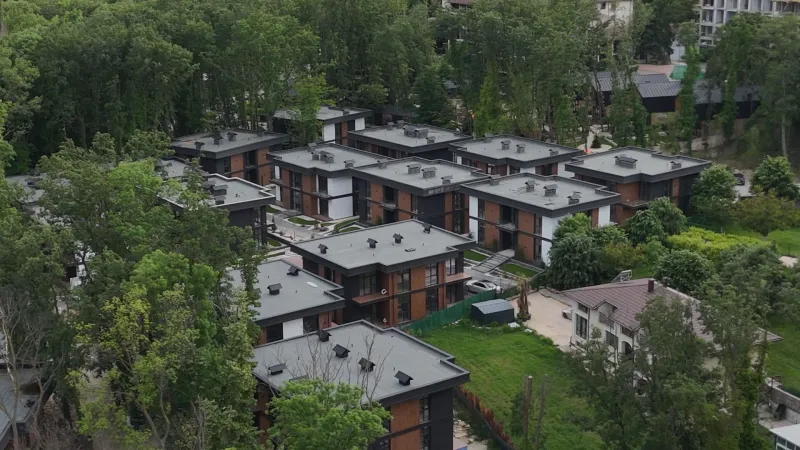
The acquisition of real property often represents the most significant financial investment in an individual’s lifetime. Naturally, at such a juncture, every purchaser seeks legal certainty. Within the Bulgarian real estate market, however, there exists a highly persistent and hazardous misconception: the notion that the execution of a transaction before a notary public constitutes an absolute guarantee of its legality and validity. Media reports concerning the large-scale scandal involving the unlawful residential complex in the “Baba Alino” area near Varna depicted dozens of purchasers who, while holding the notary deeds to their acquired real property, posed the same distressing question: how could the notary public permit the closing of a transaction for their property if said property was unlawfully constructed and subject to compulsory demolition?
The answer resides within the statutory powers vested in the notary public by operation of law. A notary public is a public official entrusted with strictly defined statutory functions. These functions encompass the verification of the identity and legal capacity of the contracting parties, the examination of representative authority, and the verification of title to the real property subject to the transaction. However, the verification of title does not equate to a verification of legality. In conducting a title examination, the notary public, relying solely upon the instruments and documentation produced by the vendor, verifies whether the vendor is the registered owner of the real property being conveyed, and nothing further. The notary public is under no statutory obligation to investigate, nor do they examine, the chain of title or the manner in which the vendor originally acquired the property. Furthermore, in the case of newly constructed property, the notary does not verify whether the construction complies with all applicable building regulations or whether it has been supported by the issuance of the requisite construction permits and documentation.
These critical verifications fall within the exclusive purview of an attorney-at-law. Unlike a notary public, whose role is confined to certifying the mutual assent of the parties—the vendor’s intent to alienate and the purchaser’s intent to acquire—an attorney acts as an advocate for the protection of their client’s interests. This role necessitates a critical and exhaustive analysis of all documentation produced by the vendor, including the entirety of the technical and construction documentation in the case of new developments. It is the attorney-at-law who will not only ascertain whether the vendor holds valid title and upon what legal grounds, but also determine the precise physical and legal delineation of the property, whether a valid Detailed Development Plan (PUP) is in force, and the implications of the Master Development Plan (OUP) for that specific territory. Furthermore, the attorney verifies whether a valid building permit has been issued, including the timeline, manner, and authority of its issuance, and whether all statutory acts required during the construction process—ranging from the protocol for the determination of the construction line and level to the final certificate of commissioning (Act 16)—were duly and properly drafted.
The attorney is likewise responsible for advising the purchaser that a certificate of “tolerability”, such as the ones issued for certain structures within the “Baba Alino” development, does not render these buildings lawful. Pursuant to the applicable provisions of the Spatial Development Act (ZUT), such certificates are issued exclusively for non-conforming structures built during specific historical periods. Utilizing this administrative mechanism as a legal basis for the “legalization” of newly constructed, modern residential complexes constitutes a legal absurdity and serves as a primary indication of material irregularities in the real property offered for sale.
As legal professionals, we recognize that for many purchasers, time is a critical factor when undertaking a real estate transaction. Nevertheless, the “Baba Alino” case serves as a poignant illustration of the consequences arising from precipitate decisions and the omission of professional legal counsel in the acquisition of real property. In the contemporary real estate market, characterized by increasingly complex investment projects, increasingly resourceful vendors, and more stringent administrative regulations, the retention of legal counsel is not a luxury, a superfluous expense, or a mere administrative formality. It is an indispensable component of risk management, ensuring that the purchaser acquires an unencumbered title to their intended home rather than initiating costly and protracted litigation.
